Google v. SerpApi: A Win for Web Scraping
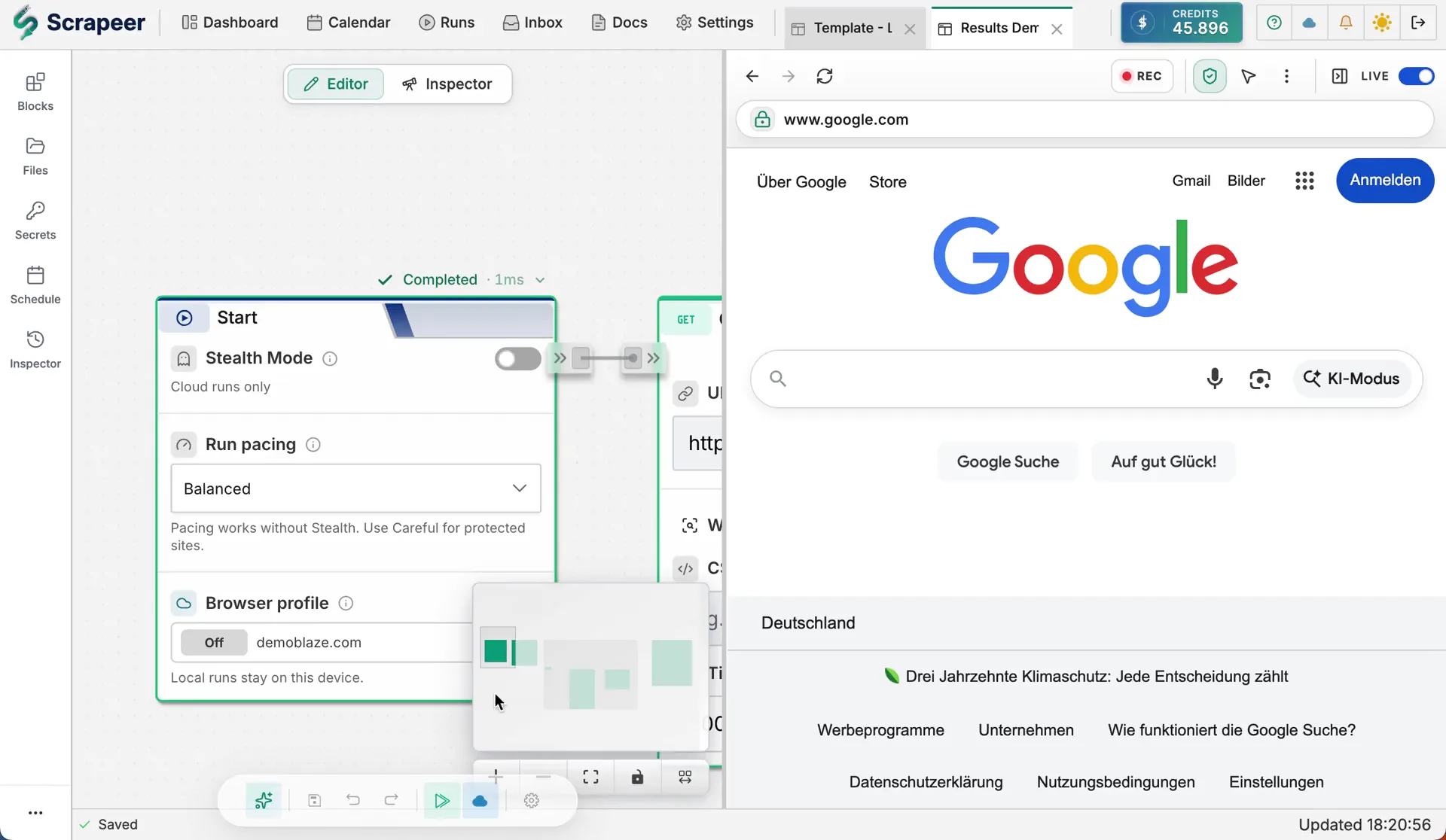
Google tried to use copyright law to stop a company from collecting its search results. On July 20, 2026, a US federal court dismissed both of Google’s claims against web scraping provider SerpApi under the Digital Millennium Copyright Act.
That makes Google v. SerpApi a real win for web scraping. The ruling does not answer every legal question about every scraping project. It draws one consequential line: an access barrier alone does not turn search results without copyrighted content into a protected work.
The claim Google brought
SerpApi turns Google search results into structured data that other applications can use. Google sued the company in December 2025, arguing that SerpApi violated two anti-circumvention provisions of the DMCA by getting past SearchGuard, Google’s system for identifying and blocking automated requests.
Google’s announcement of the lawsuit described SerpApi’s scraping as unlawful and said the company was accessing copyrighted content from third parties. SerpApi answered that the DMCA protects copyrighted works, not a website operator’s ability to control public information. In February, it asked the court to dismiss the complaint.
The court accepted neither side’s broadest position. Google did not need to own the copyrighted material to bring a DMCA claim, but owning an access-control system was not enough to win one.
The court drew a line Google could not cross
The court’s July 20 order separated Google search results into two groups:
| Search-result content | Decision and result |
|---|---|
| Results without copyrighted content | The DMCA does not apply because the access measure is not protecting a copyrighted work. The court dismissed this part without leave to amend, so Google cannot repair it by rewriting the complaint. |
| Results containing a copyrighted component, such as a licensed image in a Knowledge Panel | Google did not plausibly allege that the copyright owners authorized SearchGuard to control access to their works. This part was dismissed with leave to amend, giving Google 21 days to try again on narrower grounds. |
For search results without copyrighted content, the dismissal was not a request for Google to provide more detail. The court found that the claims failed as a matter of law and that amendment would be futile.
The second group gives Google another attempt, but on a much narrower theory. A license to display an image does not automatically show that the copyright owner authorized Google to place that work behind a particular access-control measure.
Why this is a web scraping win
Google’s theory would have stretched a copyright statute into a broader tool for controlling automated access. Under that theory, a website operator could deploy a technical barrier and then invoke the DMCA even when the collected result contained no copyrighted work.
The court rejected that argument as a matter of law. The DMCA’s anti-circumvention rules require a connection to a protected work. A technical barrier on its own does not supply that connection.
That distinction matters well beyond search APIs. The web contains facts, links, public listings, prices, addresses, opening hours, job vacancies, and other information that people turn into useful datasets every day. Website operators can build systems that distinguish browsers from automated tools, but those systems do not create copyright where copyright did not exist.
This is a district-court ruling on Google’s two DMCA claims, not a universal answer for every website, jurisdiction, or use of collected data. It is still a substantive result: Google’s attempt to apply this copyright theory to search results without copyrighted content is over at the complaint stage.
If a recurring browser task still ends in copy and paste, see how Scrapeer turns the steps into an editable visual Flow.
Public web data should not require a development team
The legal dispute concerns two technology companies, but the practical problem is familiar to much smaller teams.
Suppose you check twenty supplier pages every Monday for a hard-to-find part. You open each page, enter the same part number, read the stock status and price, and copy the result into a spreadsheet. The information is visible in your browser. Turning that repetitive path into reliable rows usually requires either maintaining code or paying someone else to maintain it.
Scrapeer is a visual web scraping and browser automation platform built in Germany for people who do not want to maintain that code. You can start with a reusable Flow from the Flow Library, build the task Block by Block, or ask the Copilot for a first version. The resulting Flow stays editable in every case.
When you run it, Liveview opens the page beside the Flow. You can watch each navigation, click, wait, extraction, and output step, then send the collected rows to CSV or Google Sheets. If the page changes, you can inspect the Block that returned the wrong result instead of replacing an invisible script.
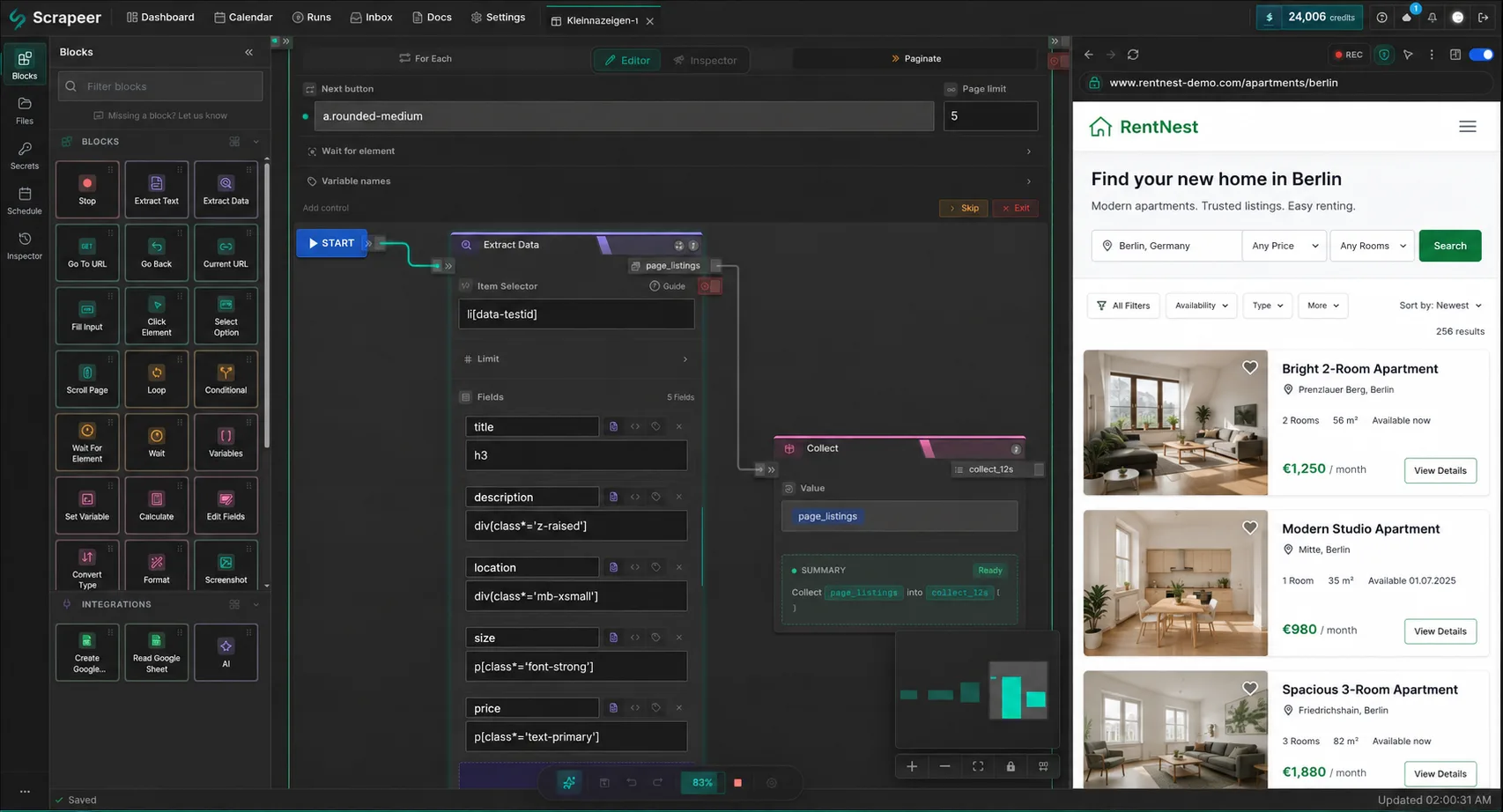
The extraction fields and collected rows stay in the Flow while Liveview shows the source page.
Download Scrapeer free and turn one browser task you already repeat into an editable Flow.
Google can file a narrower complaint
The case is not necessarily finished. Google has 21 days from July 20 to file an amended complaint concerning search results that contain copyrighted components. Discovery remains paused while the court waits for that filing and any new motion to dismiss.
What Google cannot do is revive the dismissed DMCA theory for results without copyrighted content simply by adding more detail. The court closed that part without leave to amend.
We will update this article if Google files again. For now, the first ruling is clear: copyright law does not become a general anti-scraping rule just because a website puts an access-control system in front of information.
Sources checked
- Order granting SerpApi’s motion to dismiss, July 20, 2026
- Google LLC v. SerpApi, LLC docket
- Google’s announcement of its lawsuit
- SerpApi’s explanation of its motion to dismiss
If you want to collect data from a website without writing and maintaining code, browse the Scrapeer Flow Library or compare the available plans.